
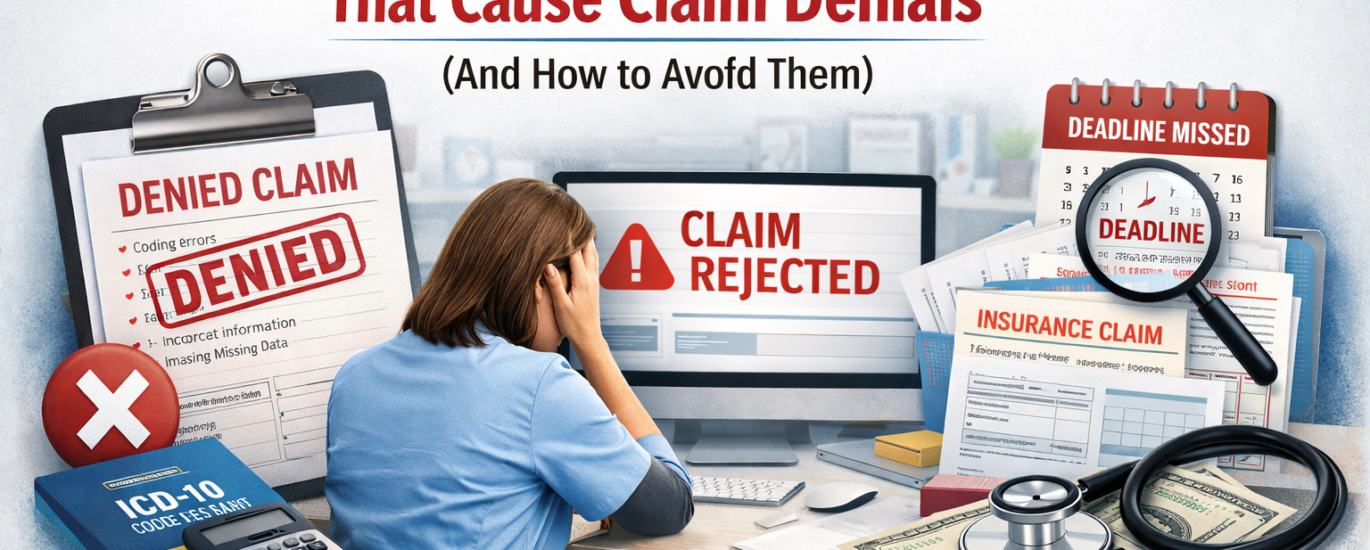
Medical billing is one of the most critical parts of running a successful healthcare practice. Even when providers deliver excellent patient care, mistakes in the billing process can lead to claim denials, delayed reimbursements, and financial losses. Many clinics lose thousands of dollars each year simply because of small administrative errors that could have been prevented.Understanding the most common medical billing mistakes can help healthcare providers reduce denials, improve reimbursement rates, and maintain a smooth revenue cycle. Below are ten of the most frequent billing mistakes and practical ways to avoid them.
## 1. Incorrect Patient Information
One of the most common reasons for claim denials is incorrect patient demographic information. Small errors such as a misspelled name, wrong date of birth, incorrect insurance ID number, or outdated address can cause a claim to be rejected immediately.Healthcare staff should always verify patient information during the registration process. Confirming insurance details and reviewing demographic data before the appointment helps prevent unnecessary claim rejections.
## 2. Failure to Verify Insurance
EligibilityInsurance eligibility verification is an essential step before providing medical services. If a patient’s insurance coverage is inactive, expired, or does not cover the service performed, the claim will most likely be denied.Practices should verify insurance eligibility before the patient’s visit. This process helps confirm coverage, copayments, deductibles, and service limitations. Proper eligibility verification prevents billing complications later.
## 3. Incorrect Medical Coding
Coding errors are another major cause of claim denials. Using incorrect CPT codes, ICD-10 diagnosis codes, or HCPCS codes can result in rejected claims or reduced reimbursement.Accurate medical coding depends on clear documentation from physicians and continuous training for medical coders. Staying updated with annual coding changes and payer-specific requirements is essential for accurate billing.
## 4. Missing or Incorrect Modifiers
Modifiers provide additional details about a procedure or service. If modifiers are missing or used incorrectly, insurance companies may deny the claim or reduce the payment amount.Billing professionals must understand when modifiers are required and ensure they are applied correctly according to payer guidelines.
## 5. Duplicate Claim Submissions
Submitting duplicate claims is a common mistake that leads to unnecessary denials. This usually happens when billing teams believe the original claim was not received by the payer.Before resubmitting a claim, billing staff should check claim status through clearinghouses or payer portals to avoid duplicate submissions.
## 6. Late Claim Submission
Insurance companies have strict deadlines for claim submissions known as timely filing limits. If a claim is submitted after this deadline, it will almost always be denied regardless of the service provided.Medical practices should establish efficient billing workflows that ensure claims are submitted quickly after the patient visit.
## 7. Lack of Proper Documentation
Insurance payers require detailed documentation to support medical services. If the physician’s notes do not justify the billed procedure or diagnosis, the claim may be denied for lack of medical necessity.Providers should maintain complete patient records, including clinical notes, treatment plans, and diagnostic results to support claims.
## 8. Billing for Non-Covered Services
Sometimes services provided by healthcare professionals are not covered by the patient’s insurance plan. If the provider submits a claim without verifying coverage, the insurance company will deny it.Practices should always check payer policies and inform patients when services are not covered under their insurance plan.
## 9. Incorrect Provider Information
Claims must include accurate provider details such as the National Provider Identifier (NPI), taxonomy code, and billing address. Errors in provider information can cause claims to be rejected before they even reach the payer’s review stage.Maintaining updated provider records in billing systems helps prevent these issues.
## 10. Weak Denial Management Process
Many healthcare practices focus heavily on claim submission but fail to implement a strong denial management process. When denied claims are ignored or not followed up correctly, practices lose valuable revenue.A proper denial management strategy involves analyzing denial reasons, correcting errors, and resubmitting claims quickly.